


Short answer:
- Regular office cleaning lowers employee exposure to dust, allergens, and surface germs that contribute to absenteeism.
- Consistent cleaning schedules support compliance with workplace air quality guidance and reduce clutter-related safety hazards.
- Businesses in Bakersfield, CA can align cleaning frequency with seasonal dust and allergy patterns common to the Central Valley.
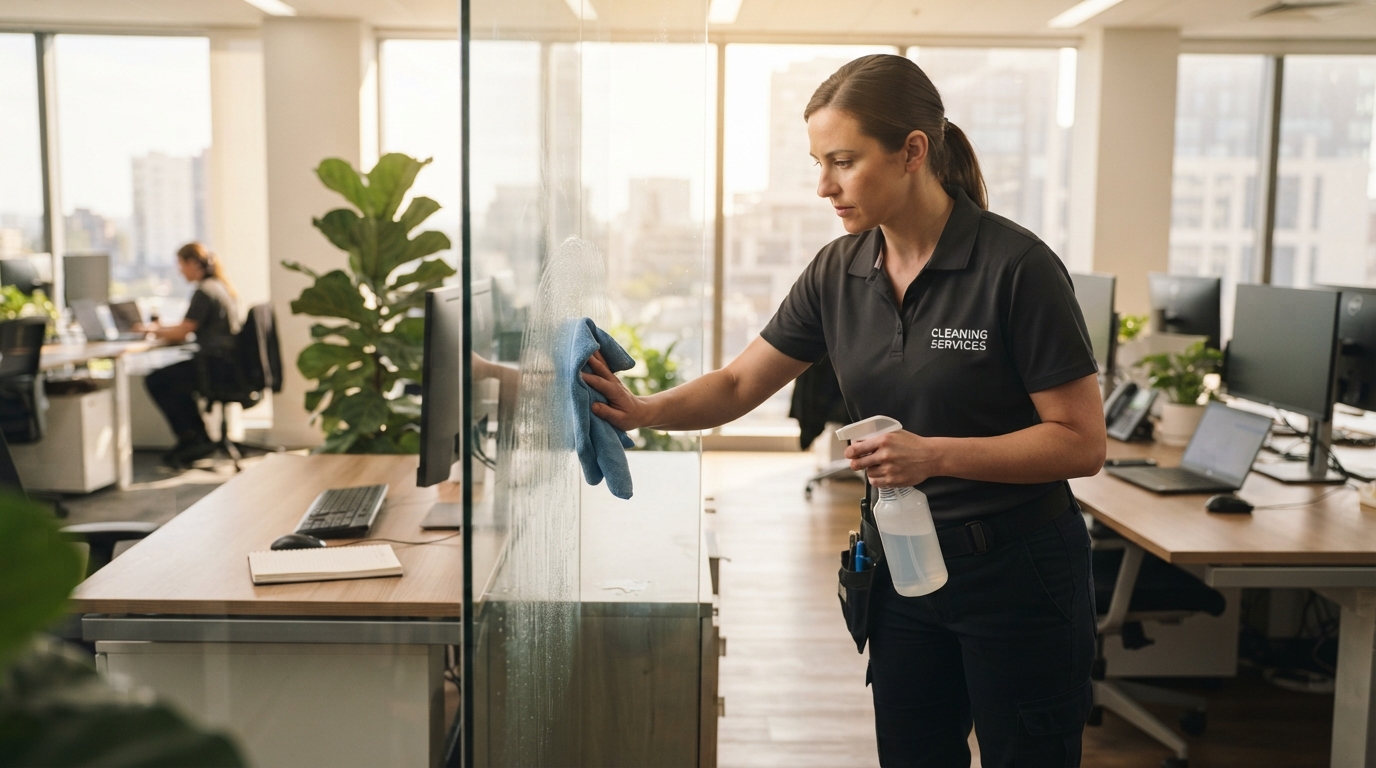
Workplace cleanliness directly affects how often employees get sick, how focused they stay during the day, and how a business appears to clients walking through the door. Professional office cleaning services address these outcomes by targeting the surfaces, air pathways, and shared spaces that accumulate contaminants between visits. For offices in Bakersfield, CA, where dry conditions and seasonal dust are common, a structured cleaning routine matters more than occasional tidying.
Office buildings contain a variety of high-touch surfaces, shared equipment, and enclosed air systems where dust, germs, and other contaminants can accumulate without proper maintenance. According to the Occupational Safety and Health Administration (OSHA), maintaining a healthier indoor environment requires regular cleaning of office spaces and common areas, along with the safe storage of cleaning products and workplace chemicals. Whether cleaning is managed in-house or outsourced, partnering with a professional cleaning company like Clean Stride helps businesses maintain cleaner, healthier, and more hygienic work environments.
Why Cleaning Frequency Affects Employee Health
Dust, allergens, and bacteria build up fastest in areas with heavy foot traffic or shared equipment. Offices that skip regular cleaning cycles often see more sick days tied to respiratory irritation and seasonal allergy flare-ups, particularly during Bakersfield’s dry, dust-prone months.
Key health-related benefits of a consistent cleaning schedule include:
- Reduced buildup of dust and allergens on desks, vents, and carpeted areas
- Fewer germs on shared surfaces such as doorknobs, keyboards, and break room equipment
- Better-maintained restrooms and kitchen areas, which lowers the risk of cross-contamination
- Lower likelihood of mold or mildew forming in humid or poorly ventilated corners
OSHA’s technical guidance also points to air treatment practices, including maintaining indoor air relative humidity below 60 percent, as part of preventing biological hazards tied to poor building maintenance.
How Cleanliness Connects to Productivity
A visibly clean workspace reduces distractions and supports employee focus, while clutter and grime can quietly lower morale over time. Employees working in offices with inconsistent cleaning often report more discomfort from odors, dust, or visible debris, which can affect concentration during the workday.
Cleaner spaces also reduce time lost to informal, ad hoc tidying by staff who are not trained for deep sanitation tasks. When professional crews handle floors, restrooms, and common areas on a set schedule, employees spend less time managing cleanliness issues themselves and more time on core work tasks.
Comparing Cleaning Approaches for Offices
Office managers in Bakersfield, CA typically choose between in-house tidying, one-time deep cleans, and recurring professional service. Each option affects consistency, cost predictability, and health outcomes differently.
| Approach | Consistency | Health Impact | Staff Time Required |
| In-house tidying only | Variable, depends on staff availability | Limited, surface-level only | High |
| One-time deep clean | Low, addresses backlog but not ongoing buildup | Short-term improvement | Low during service |
| Recurring professional cleaning | High, scheduled and standardized | Sustained reduction in dust and germs | Minimal |
Recurring service tends to produce the most consistent results because it follows a fixed routine rather than reacting to visible mess after it accumulates.
What a Routine Office Cleaning Service Typically Covers
Professional office cleaning generally focuses on the spaces employees and visitors use most. Common service components include:
- Lobbies and reception areas, where first impressions and foot traffic both matter
- Common areas and break rooms, which accumulate food debris and shared-surface contact
- Restrooms, requiring sanitation standards beyond general tidying
- Desks, floors, and high-touch points such as door handles and light switches
Crews that return to the same account regularly tend to notice small maintenance issues, such as a recurring stain or a ventilation grate collecting dust, before they become larger problems.
Frequently Asked Questions
How often should an office be professionally cleaned? Frequency depends on foot traffic, industry, and building size, but many offices schedule cleaning multiple times per week to keep dust and germs from accumulating between visits.
Does regular cleaning reduce employee sick days? Routine cleaning reduces exposure to surface bacteria and airborne dust, both of which contribute to respiratory irritation and the spread of common illnesses in shared spaces.
Is office cleaning different from standard janitorial service? Office cleaning typically focuses on daily and weekly maintenance of workspaces, while janitorial service can include a broader range of building upkeep tasks performed on a recurring contract.
Can cleaning schedules be adjusted for seasonal conditions? Yes, many providers adjust frequency or focus areas based on seasonal factors such as increased dust or allergy-related buildup common in dry climates like Bakersfield, CA.
Local Cleaning Considerations
Readers can Contact Clean Stride for published location and contact details.

 SOLED ADEPPS