




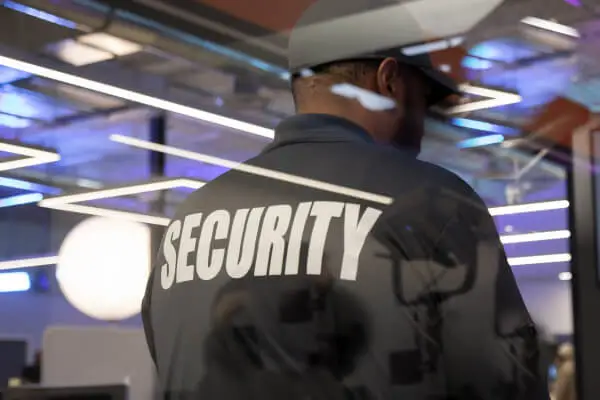
When multiple contractors share one construction site entrance, security personnel help maintain authorized access, monitor arrivals, document unusual activity, and communicate access concerns to project management. Construction site security guards support these responsibilities while contractors, subcontractors, suppliers, and delivery drivers follow different schedules and access requirements.
On commercial construction projects in Tucson, Arizona, a shared entrance may serve several companies working on different parts of the same development. This arrangement can create confusion about who is authorized to enter, which areas they need to access, and who should resolve unexpected arrival requests. Professional security oversight helps maintain consistent access monitoring without transferring construction management duties to security officers.
Why Do Shared Construction Entrances Require Additional Security Attention?
Large construction projects rarely involve just one contractor. General contractors, specialized trade subcontractors, material suppliers, and equipment providers often work at the same property throughout different construction phases.
A commercial development might accommodate electricians, plumbing contractors, concrete crews, and delivery drivers through one designated gate. Some workers arrive before regular business hours, while others enter during scheduled shifts or return for specialized tasks.
The existence of a shared entrance does not mean everyone entering the property has identical permissions.
How Do Security Guards Distinguish Between Different Contractor Groups?
A shared jobsite entrance can accommodate individuals representing several independent businesses. Security officers must work within the access arrangements established for the property rather than assuming that every contractor follows the same schedule or authorization requirements.
Understanding Authorized Site Access
A construction security guard assigned to an entrance can monitor arrivals according to the information provided by authorized management personnel.
For example, an electrical subcontractor may have permission to access a partially completed building, while a delivery driver may only be authorized to reach a designated receiving area.
Handling Unexpected Contractor Arrivals
Construction schedules frequently change.
An unexpected arrival does not necessarily indicate unauthorized activity.
Professional security personnel can communicate with the designated project representative to clarify the individual’s access status.
Monitoring Contractor Representatives and Visitors
Not everyone entering a construction site performs physical construction work.
Project owners, engineers, inspectors, supplier representatives, and other authorized visitors may also require access.
Security personnel can follow established visitor procedures and communicate unusual requests to the appropriate project contact.
What Happens When Contractors Arrive at the Same Time?
Shared entrances can become particularly active when several contractor groups begin work during overlapping periods.
Maintaining Access Monitoring During Busy Periods
Consider a commercial building project where electrical, mechanical, and interior finishing crews begin work within the same half-hour.
Security officers assigned to entrance monitoring can maintain awareness of arriving personnel and follow the site’s authorization procedures.
Distinguishing Security Oversight From Traffic Control
A busy entrance may also involve construction trucks, service vehicles, and pedestrian movement.
Directing heavy vehicles, establishing traffic routes, and supervising construction vehicle movements are responsibilities that require appropriate planning and qualified personnel.
Security officers should not automatically be expected to perform those duties simply because they are stationed near an entrance.
How Are Delivery Drivers Handled at Shared Construction Entrances?
Material deliveries introduce another category of individuals who may require access to a construction project without being regular site workers.
Monitoring Scheduled Deliveries
When assigned, officers can monitor vehicle arrivals and communicate relevant access questions.
For example, a truck carrying building materials may arrive before the receiving subcontractor is available.
The security officer can refer the situation to the appropriate contact instead of independently approving an alternate unloading arrangement.
Addressing Unscheduled Commercial Vehicles
An unfamiliar commercial vehicle may have a legitimate reason for arriving even when its information is absent from the security officer’s current instructions.
Professional guards can document relevant details and request clarification through established communication channels.
Observing Activity Near Equipment Storage Areas
Security personnel can maintain awareness of designated restricted areas and document unusual access activity.
However, they do not independently determine material ownership, supervise inventory transfers, or authorize equipment use.
Why Is Communication Important on Multi-Contractor Construction Sites?
Construction projects involving several employers require clear communication about responsibilities and changing site conditions.
The Occupational Safety and Health Administration recognizes these environments as multiemployer worksites and emphasizes coordination between employers, contractors, and staffing agencies.
This regulatory framework concerns workplace safety, not the authority of private security officers.
Nevertheless, it illustrates why clearly assigned responsibilities matter when numerous independent companies occupy one property.
Communicating Access Questions to the Right Contact
A security officer may encounter a worker requesting entry to a restricted section without having sufficient information to approve the request.
Rather than deciding independently, the officer can contact the authorized project representative.
Maintaining Professional Communication Between Contractors
Disagreements can occur when workers believe they have conflicting instructions.
Security officers should maintain professional neutrality rather than attempting to settle contractual or scheduling disagreements.
How Do Security Officers Document Shared-Entrance Activity?
Security documentation becomes especially valuable when several contractor groups use the same property.
Recording Relevant Access Concerns
Depending on the assignment, security officers may document the time, location, description, and circumstances of an access-related incident.
The record should distinguish observable facts from assumptions.
An unfamiliar contractor should not automatically be described as an intruder without sufficient information.
Maintaining Continuity Between Security Shifts
On projects with extended operating hours, one security officer may conclude an assignment while another begins coverage.
Relevant information about unresolved access questions should remain available through established reporting procedures.
Separating Security Records From Construction Records
Security activity reports serve a different purpose from contractor attendance records, delivery manifests, and construction progress documentation.
They should not be treated as substitutes for those operational systems.
What Changes When Contractor Schedules Overlap or Shift?
The number of contractors using a construction entrance may vary considerably throughout a project.
Foundation work, structural construction, mechanical installation, and interior finishing can involve different combinations of workers and suppliers.
Different Construction Phases Bring Different Personnel
During structural work, a shared entrance may accommodate concrete suppliers, steel crews, and heavy equipment contractors.
Later, the same entrance may serve electrical contractors, flooring installers, and finishing crews.
Security personnel need current authorization information appropriate to the assignment.
Temporary Changes to Entrance Availability
A designated entrance may become unavailable because of construction activity, maintenance, or other project circumstances.
In that situation, management may establish an alternate authorized access point.
Security officers can follow the revised instructions once they are properly communicated.
What Makes Shared-Entrance Security Relevant in Tucson?
Commercial construction in Tucson can include warehouse developments, office buildings, industrial facilities, retail properties, and other projects involving multiple contractors.
The specific security requirements depend on the property’s layout, construction schedule, and authorized access arrangements.
Professional security coverage should reflect those actual conditions rather than assume every Tucson construction project operates identically.
Property Layout Influences Security Responsibilities
Some construction entrances connect directly to public roads, while others are located inside larger commercial developments.
A guard stationed at a construction entrance does not automatically possess authority over surrounding public roads or unrelated properties.
Access Needs Can Change Throughout the Project
As construction advances, different contractors may require access to different sections of the property.
Security personnel can support the updated arrangements by following approved instructions and reporting concerns.
What Should Project Managers Expect From Professional Site Security?
Professional construction security guards provide oversight of assigned property areas and help maintain established access arrangements.
A construction security guard is not a substitute for a superintendent, contractor coordinator, safety manager, or qualified traffic-control professional.
For projects with multiple subcontractors, professional security coverage is most clearly defined when access permissions, reporting relationships, and assigned monitoring areas are established by the responsible management team.
Companies evaluating Construction site security services should understand how guard coverage fits into those arrangements rather than expecting security officers to independently manage construction operations.
Why Clear Authority Matters More Than the Number of Contractors
The presence of numerous contractors does not automatically create a security problem.
Challenges arise when access responsibilities are unclear, instructions change without communication, or security officers lack the information necessary to perform their assigned duties.
Professional Security Oversight for Shared Construction Entrances
When multiple contractors share one entrance, effective security depends on consistent access monitoring, clear reporting relationships, and professional communication.
Construction site security guards support the process by observing assigned entrances, documenting security-related concerns, and following the property’s established access instructions.
They do not replace construction supervisors, determine contractor qualifications, or manage heavy vehicle movements.
For commercial construction projects in Tucson, understanding these boundaries helps contractors and property stakeholders establish realistic expectations for professional security coverage.
About Urban Tactical Security
Urban Tactical Security is a Phoenix-based, locally owned security company providing professional guard and construction site protection services throughout the Phoenix and Tucson areas. Licensed in Arizona under License No. 1562419, they offer armed and unarmed security personnel, mobile patrol services, and security monitoring for commercial properties and active construction sites. Their office is located at 18631 N. 19th Ave, #158-168, Phoenix, AZ 85027; they can be reached at 623-853-3712, and their location is available through Google Maps.
 SOLED ADEPPS

 Alexander Martin