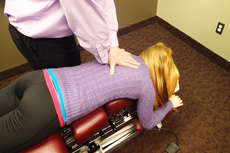


Cervical and lumbar spinal decompression are evaluated differently because the neck and lower back have distinct anatomical structures, movement demands, nerve pathways, and clinical risk considerations. Before recommending treatment, a healthcare professional must determine which spinal region is involved, how symptoms relate to examination findings, and whether mechanical traction is appropriate for the patient’s condition.
Neck-related conditions may affect the shoulders, arms, or hands, while lower back problems can produce discomfort extending into the buttocks or legs. These differences influence how clinicians investigate symptoms and determine whether additional medical evaluation is necessary.
How Do the Cervical and Lumbar Spine Differ Anatomically?
The cervical spine consists of seven vertebrae that support the head and permit movement in several directions. Its flexibility allows people to turn, bend, and position their heads throughout everyday activities.
The lumbar spine contains five vertebrae and supports substantial body weight while contributing to bending, lifting, and maintaining an upright posture.
Cervical Spine Considerations
The cervical spine contains the spinal cord, nerve roots, joints, ligaments, and supporting muscles within a relatively mobile anatomical region.
Because cervical nerve roots contribute to sensation and movement in the upper extremities, certain neck conditions can produce symptoms beyond the neck itself.
The proximity of the spinal cord and important vascular structures also makes careful assessment essential before applying mechanical forces to the neck.
Lumbar Spine Considerations
Lumbar nerve roots contribute to function in the lower extremities.
Conditions affecting these structures may produce lower back discomfort, radiating leg pain, altered sensation, or muscle weakness.
The spinal cord typically ends around the upper lumbar region in adults, with nerve roots continuing below it as the cauda equina.
Why Does Symptom Location Matter During Evaluation?
The location of discomfort provides useful information, but it does not independently establish a diagnosis.
Symptoms Associated With the Cervical Region
A clinical assessment for cervical decompression therapy may consider discomfort extending into the shoulder, arm, or hand.
When nerve root involvement is suspected, clinicians may investigate whether sensory changes, reflex differences, or muscle weakness correspond with a particular neurological pattern.
However, arm pain does not always originate in the cervical spine.
Shoulder disorders, peripheral nerve conditions, and other medical problems can produce similar complaints.
Symptoms Associated With the Lumbar Region
Patients evaluated for lumbar decompression may describe discomfort in the lower back, buttocks, thighs, or lower legs.
Radiating pain can sometimes be associated with lumbar nerve root irritation, including conditions commonly described as sciatica.
Nevertheless, not all leg discomfort originates from spinal nerve compression.
Hip disorders, peripheral nerve problems, and other conditions may require consideration.
How Does Nerve Involvement Change the Clinical Assessment?
Nerve-related findings can influence whether spinal decompression is considered, deferred, or ruled out.
Cervical Neurological Evaluation
A cervical assessment may include examination of arm strength, sensation, reflexes, and coordination.
Difficulty with hand coordination, balance disturbances, or progressive neurological abnormalities can require medical investigation.
A patient with suspected cervical myelopathy requires appropriate medical assessment rather than routine traction.
Lumbar Neurological Evaluation
A lumbar assessment may examine leg strength, sensation, reflexes, and findings associated with nerve root irritation.
New bladder or bowel dysfunction, saddle-area sensory changes, or significant progressive leg weakness can suggest a serious neurological emergency.
Such findings require urgent medical evaluation rather than a routine appointment for spinal decompression treatment.
Why Is Medical History Important Before Decompression?
Medical history can identify conditions that influence the appropriateness of traction-based treatment.
A clinician may review previous spinal surgery, fractures, osteoporosis, inflammatory conditions, cancer history, neurological diagnoses, and relevant injuries.
Previous Cervical Conditions
A history of cervical surgery, significant instability, or certain neurological conditions may require particular caution.
Some patients have previous imaging showing degenerative changes, disc abnormalities, or narrowing around spinal structures.
An abnormal scan does not automatically establish that cervical spine decompression therapy is appropriate.
Previous Lumbar Conditions
Patients with previous lumbar surgery, vertebral fractures, or significant structural abnormalities may also require additional assessment.
A prior disc diagnosis does not necessarily explain a new episode of lower back pain.
Similarly, previous treatment success does not establish that repeating the same intervention is appropriate for a new condition.
How Do Imaging Findings Influence Treatment Decisions?
Diagnostic imaging can help clarify certain spinal conditions when clinical findings justify further investigation.
X-rays primarily reveal bone structures, while MRI examinations provide more detailed information about discs, nerves, the spinal cord, and surrounding soft tissues.
Imaging of the Cervical Spine
When cervical radiculopathy, spinal cord involvement, or another significant condition is suspected, imaging may help clarify the underlying concern.
The American College of Radiology provides different imaging recommendations depending on whether symptoms are acute, chronic, neurological, traumatic, or associated with concerning clinical findings.
Imaging of the Lumbar Spine
Routine imaging is not generally recommended for uncomplicated lower back pain without concerning findings.
MRI may become relevant when symptoms suggest significant neurological involvement, serious underlying disease, or when persistent symptoms warrant further investigation.
Importantly, degenerative findings and disc abnormalities can appear in people without pain.
Neither cervical nor lumbar treatment should be selected solely because a scan identifies a disc bulge.
Why Can’t the Same Decompression Approach Be Used for Both Regions?
The neck supports the head and requires considerable mobility, while the lower back accommodates substantial weight-bearing forces.
Consequently, traction positioning, applied forces, patient support, and treatment precautions cannot simply be transferred from one region to another.
A practitioner must also determine whether traction is suitable at all.
For patients exploring spinal decompression therapy, understanding these distinctions can help clarify why an individualized evaluation comes before treatment recommendations.
Importantly, decompression is not appropriate for every spinal condition, and evidence supporting its effectiveness varies depending on the diagnosis and patient population.
What Medical Conditions May Affect Treatment Suitability?
Before considering either cervical or lumbar traction, clinicians must evaluate possible contraindications and conditions requiring additional medical attention.
Suspected fractures, spinal instability, certain serious bone disorders, and significant neurological problems can affect treatment safety.
For cervical treatment, particular attention may be necessary when findings suggest spinal cord involvement or structural instability.
For lumbar treatment, progressive neurological abnormalities or symptoms suggesting cauda equina syndrome require urgent assessment.
Patients with substantial osteoporosis, certain malignancies, or previous spinal procedures may also require individualized evaluation.
Is the Evidence for Cervical and Lumbar Traction the Same?
The scientific evidence supporting mechanical traction differs across spinal conditions, treatment methods, and research populations.
For lower back pain, a Cochrane systematic review found that traction generally provides little or no meaningful benefit for many patients compared with comparison interventions.
Some clinical guidance identifies limited circumstances in which particular patients with signs of nerve root compression might benefit from lumbar traction, but these findings do not establish effectiveness for everyone.
Evidence for cervical traction is also mixed.
Research has examined its possible role in selected neck disorders, including cervical radiculopathy, but study quality and treatment differences limit broad conclusions.
A clinician should explain that decompression is not a guaranteed solution, does not reliably reverse disc abnormalities, and should not replace necessary medical or surgical evaluation.
How Are Treatment Decisions Made After the Evaluation?
Once medical history, symptoms, neurological findings, and relevant diagnostic information have been reviewed, a clinician can discuss possible treatment options.
The evaluation may indicate that conservative management is reasonable.
Alternatively, findings may suggest that further diagnostic investigation, medical referral, or another form of treatment is more appropriate.
If decompression is considered, the professional should explain its intended role, potential limitations, and reasons for reassessment.
For individuals in Westfield, NJ, seeking an evaluation for persistent neck or lower back discomfort, this process provides an opportunity to discuss whether spinal decompression fits their particular clinical circumstances.
Why Might a Treatment Plan Need Reassessment?
Clinical findings can change during the course of care.
For example, new neurological deficits or worsening radiating symptoms may indicate that continuing the same intervention is inappropriate.
A professional should consider whether the patient’s response supports continued treatment or whether another evaluation is necessary.
Treatment monitoring is particularly important because relief from discomfort does not automatically demonstrate correction of an underlying structural abnormality.
Understanding the Difference Between Cervical and Lumbar Evaluations
A cervical assessment places particular emphasis on upper-extremity symptoms and possible spinal cord involvement. A lumbar assessment considers lower-extremity neurological function, weight-bearing demands, and conditions affecting lumbar nerve roots.
Spinal decompression may be considered in selected clinical circumstances, but its effectiveness is not established for every condition or patient.
A careful professional evaluation helps determine whether traction is reasonable, whether another treatment approach is preferable, or whether additional medical assessment should come first.
About Balanced Corrective Chiropractic
Based in Westfield, NJ, Balanced Corrective Chiropractic provides corrective chiropractic care and spinal decompression services at 141 South Euclid Avenue. Its founder, Dr. Damien Kang, holds a Doctor of Chiropractic degree from New York Chiropractic College and is a licensed, board-certified chiropractor with Chiropractic BioPhysics certification. To learn more about their practice or inquire about a professional evaluation, call (908) 989-3303 or locate their Westfield office on Google Maps.
 SOLED ADEPPS