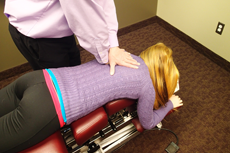
Pain or stiffness when reaching behind your back can point to restricted shoulder mobility, irritation within the joint, or tension in the muscles and soft tissues that help control shoulder movement. Because this motion requires several parts of the shoulder to work together, difficulty performing it can provide useful clues about where movement may be limited.
Reaching behind your back may seem like a simple action, but it combines rotation, extension, and coordinated movement of the shoulder blade. When one part of that system is not moving comfortably, everyday tasks such as fastening clothing, reaching into a back pocket, putting on a coat, or grabbing something from the back seat can become surprisingly difficult.
Why Is Reaching Behind Your Back Such a Demanding Shoulder Movement?
The shoulder has a large range of motion compared with many other joints. That flexibility depends on coordinated movement between the upper arm, shoulder blade, surrounding muscles, tendons, and joint structures.
When the arm moves behind the body, the shoulder must rotate internally while also extending backward. The shoulder blade must move appropriately at the same time.
If mobility is restricted in one area, the body may compensate somewhere else. A person may twist their torso, lift the shoulder, lean forward, or force the arm farther than is comfortable.
Those compensations can make the movement possible temporarily, but they may also signal that normal shoulder mechanics are not occurring efficiently.
What Can Cause Pain During This Movement?
Several conditions can make reaching behind the back uncomfortable.
One possibility is general joint stiffness. This can develop gradually after periods of limited movement, previous injury, or repetitive activity.
Rotator cuff irritation may also affect certain shoulder movements. The rotator cuff consists of muscles and tendons that help stabilize and move the shoulder. When these tissues become irritated, reaching overhead or behind the body may become uncomfortable.
Other possible contributors include:
- Restricted shoulder joint mobility
- Muscle tightness
- Tendon irritation
- Previous shoulder injuries
- Changes in shoulder blade mechanics
- Arthritis-related stiffness
- Inflammation surrounding the joint
The exact location of discomfort can also vary. Some people feel symptoms at the front of the shoulder, while others notice them along the side, back, or upper arm.
Could Restricted Movement Be Related to Frozen Shoulder?
It can be, although not every stiff shoulder is frozen shoulder.
Frozen shoulder, also known as adhesive capsulitis, is characterized by progressive pain and substantial restriction in shoulder movement. Over time, both active movement and passive movement can become limited.
Someone with frozen shoulder may have difficulty reaching overhead, reaching across the body, or placing the hand behind the back.
However, limited internal rotation alone does not confirm frozen shoulder. Shoulder stiffness can have several causes, which is why an evaluation is useful when restriction persists or worsens.
Why Does Shoulder Blade Movement Matter?
The shoulder blade, or scapula, provides a moving base for the upper arm.
During normal shoulder motion, the scapula rotates and shifts along the rib cage. If this movement is restricted or poorly coordinated, the upper arm may have to compensate.
This can become especially noticeable when reaching behind the body because the shoulder requires coordinated motion rather than movement from one joint alone.
A chiropractic evaluation may therefore look beyond the painful spot itself. The neck, upper back, shoulder blade, and shoulder joint can all influence how comfortably the arm moves.
Can Chiropractic Care Help Address Restricted Shoulder Movement?
Chiropractic care may be considered when shoulder symptoms appear to involve joint mobility, movement restrictions, or surrounding musculoskeletal factors.
A provider may assess shoulder range of motion, joint mechanics, posture, neck and upper-back mobility, and how the shoulder blade moves during different tasks.
Depending on the findings, chiropractic treatment may include manual techniques, mobility work, rehabilitation exercises, or carefully selected chiropractic adjustments.
People sometimes search for a chiropractor shoulder adjustment when shoulder movement becomes uncomfortable. However, care should not begin with the assumption that an adjustment is automatically needed. The first step should be determining what is limiting the movement and whether chiropractic care is appropriate for the specific situation.
How Is Chiropractic Therapy Different From Simply Stretching the Shoulder?
Stretching may help when muscle tightness contributes to limited movement, but not every stiff shoulder responds well to aggressive stretching.
If a joint is irritated, a tendon is sensitive, or movement mechanics are altered, repeatedly forcing the arm farther behind the back may increase symptoms rather than improve them.
Chiropractic therapy generally begins with evaluating the structures and movements involved before recommending specific strategies.
For some people, the plan may focus on restoring comfortable joint mobility. For others, shoulder blade control, upper-back movement, or strengthening may be more relevant.
This individualized approach is important because the same movement restriction can occur for different reasons.
When Should Shoulder Restriction Be Evaluated?
Occasional stiffness after unusual activity may improve with rest and normal movement. Persistent or worsening restriction deserves more attention.
Consider an evaluation if:
- Reaching behind the back remains difficult for several weeks
- Shoulder motion is becoming progressively more limited
- Symptoms interfere with dressing, sleeping, or work
- You cannot raise or rotate the arm normally
- Weakness accompanies the discomfort
- The problem began after an injury
Sudden severe pain, visible deformity, significant swelling, or an inability to move the arm after trauma should receive prompt medical attention.
What Can Glendale Residents Do About Ongoing Shoulder Stiffness?
Start by noticing which movements are difficult and whether symptoms are changing over time.
Avoid repeatedly forcing the shoulder into painful positions. Gentle movement within a comfortable range may be more useful than aggressively pushing through restriction.
For people in Glendale, AZ, a chiropractor can evaluate whether the shoulder itself, surrounding joints, or movement patterns may be contributing to the problem. When appropriate, chiropractic care can be incorporated alongside mobility and rehabilitation strategies.
Restricted movement while reaching behind the back is not a diagnosis by itself. It is a useful signal that the shoulder may not be moving as freely as it should, and identifying the reason can help guide the next appropriate step.