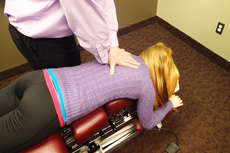




Recurring stiffness may be a reason to see a chiropractor when it repeatedly returns, limits comfortable movement, interferes with normal activities, or follows a consistent pattern related to sitting, work, exercise, or other physical demands. An evaluation can help determine whether the stiffness appears musculoskeletal and whether chiropractic care is an appropriate option.
Almost everyone feels temporarily stiff from time to time. A long drive, unfamiliar workout, afternoon at a desk, or weekend project can leave muscles and joints feeling less comfortable than usual.
The more useful question is what happens next.
Stiffness that disappears and stays away is different from a problem that improves briefly and returns every few days. When the same limitation keeps showing up, paying attention to its pattern can help determine whether professional evaluation makes sense.
What Does Recurring Stiffness Mean?
Recurring stiffness describes a feeling of restricted, tight, or uncomfortable movement that repeatedly returns after improving.
It is a symptom rather than a diagnosis.
One person may notice low-back stiffness every morning that improves after walking around. Someone else may feel their neck become progressively tighter after several hours at a computer. Another person might be comfortable during normal daily activities but repeatedly become stiff after running, lifting, or gardening.
When Is Occasional Stiffness Usually Less Concerning?
Short-lived stiffness after an unusual activity can happen without indicating an ongoing problem.
For example, someone who has not exercised for several weeks may feel stiff after returning to the gym. A person who spends several hours working in the yard may notice their back feels less flexible that evening.
If symptoms are mild, clearly linked to an unusual physical demand, and steadily improve, monitoring the problem may be reasonable.
What Patterns Suggest It May Be Time for an Evaluation?
There is no single rule that determines when someone should schedule chiropractic care. Several patterns, however, can make an evaluation more useful.
The Stiffness Keeps Returning in the Same Area
A problem that repeatedly appears in the same location may deserve closer attention.
Perhaps the lower back feels stiff after sitting through the afternoon. Stretching helps for a while, but the same sensation is back the next day.
Movement Is Becoming More Limited
Stiffness matters more when it begins to change what someone can comfortably do.
A person may start turning their entire upper body instead of rotating their neck while driving. Someone with back stiffness may find that bending to put on shoes takes more effort.
These functional changes are useful information for a chiropractor because they show how the symptom affects everyday movement rather than focusing only on discomfort.
Rest Helps, but the Problem Returns With Normal Activity
Temporary relief after resting does not always mean the underlying contributor has disappeared.
For example, someone may feel better after taking a weekend away from their desk. By Tuesday afternoon, the stiffness has returned.
That pattern can point toward factors such as prolonged positioning, repeated physical demands, movement habits, or other musculoskeletal contributors that may be worth evaluating.
The Same Activity Consistently Triggers the Problem
Recurring symptoms sometimes have a predictable trigger.
Long commutes, prolonged computer work, repetitive lifting, certain exercises, or extended standing may repeatedly bring the stiffness back.
Recognizing that connection can make an evaluation more productive because the person can describe not only where they feel stiff but also when the problem tends to appear.
Why Can Stiffness Keep Coming Back?
There are many possible reasons, and an online article cannot determine which one applies to an individual.
Muscles and joints are affected by activity, rest, repetitive loading, previous injuries, changes in exercise, prolonged positions, and numerous other factors.
Consider a Bellevue professional who spends much of the day working between a laptop and external monitor. The person may feel relatively comfortable in the morning but develop neck and shoulder stiffness later in the afternoon.
Another individual may notice low-back stiffness only after long drives. Someone who recently increased running mileage may feel fine during normal daily activities but repeatedly become stiff after training.
What Can a Chiropractor Evaluate?
A chiropractor can assess a musculoskeletal complaint by first learning how the symptoms began and how they affect movement.
A visit may involve questions about previous injuries, work demands, exercise, daily activities, symptom timing, and which movements make the stiffness better or worse.
The physical evaluation can then help determine how the person moves and whether the concern appears appropriate for chiropractic services.
For someone considering chiropractic treatment, the goal should not be to assume that every stiff area needs an adjustment.
Evaluation comes first so the provider can decide whether chiropractic care fits the presentation.
Does Recurring Stiffness Always Mean You Need an Adjustment?
No.
A chiropractic adjustment may be part of care for some musculoskeletal concerns, but recurring stiffness does not automatically mean manipulation is appropriate.
That distinction is important because stiffness is broad. Someone may feel restricted because of recent physical exertion, muscle guarding, joint irritation, an old injury, or another health issue entirely.
What Information Should You Track Before an Appointment?
Patients can often provide better information when they pay attention to patterns for a few days.
They do not need to diagnose themselves. They simply need to notice what is happening.
Useful details include:
- Where the stiffness occurs
- What time of day it tends to appear
- Which activities seem to trigger it
- Whether one direction of movement feels harder
- How long symptoms last
- What makes the area feel temporarily better
- Whether the problem is becoming more frequent
- Whether pain occurs along with the stiffness
- Whether numbness, tingling, or weakness is present
For example, “My back is stiff” provides less information than “My lower back starts feeling stiff after about an hour of sitting and loosens after I walk for several minutes.”
Specific observations can help a healthcare provider better understand the problem.
Should You Keep Stretching a Stiff Area?
Gentle movement may feel useful for some uncomplicated stiffness, but repeatedly forcing a painful or restricted movement is not necessarily helpful.
A person who feels stiff may stretch the area every hour because it provides temporary relief. If the sensation continues returning, however, stretching alone may not explain why.
Someone with neck stiffness, for example, may repeatedly turn as far as possible to see whether the restriction is still present. That repeated testing can make it harder to judge how the area actually feels during normal daily activity.
Does Sitting Too Long Contribute to Stiffness?
Prolonged sitting can contribute to discomfort or stiffness for some people, particularly when they remain in one position for extended periods.
Someone working at a desk might try standing briefly, walking during breaks, changing positions, or arranging frequently used equipment so they do not remain rotated toward one side throughout the day.
If those simple changes help but the same problem continues returning, discussing the pattern during an evaluation may provide additional context.
What About Stiffness After Exercise?
Exercise can temporarily leave muscles feeling stiff, particularly after unfamiliar or more demanding activity.
Suppose a recreational runner feels low-back stiffness after every long run, even though shorter runs are comfortable. Another person may notice the same neck or upper-back restriction after each strength-training session.
Instead of simply pushing through it or stopping all activity, an evaluation can help determine whether the symptom pattern warrants further attention.
How Common Are Musculoskeletal Pain Problems?
Musculoskeletal discomfort is common among adults.
Data from the National Center for Health Statistics found that 39.0% of U.S. adults reported back pain during the previous three months in 2019.
That statistic refers specifically to back pain rather than stiffness and should not be interpreted as showing how many people need chiropractic care.
It does illustrate that back-related complaints are common and that many adults eventually need to decide whether persistent or recurring symptoms deserve professional evaluation.
When Is a Chiropractic Evaluation More Useful Than Waiting?
An evaluation becomes increasingly reasonable when stiffness:
- Returns frequently despite temporary improvement
- Limits normal movement
- Interferes with work, driving, exercise, sleep, or household tasks
- Consistently appears after the same activity
- Is becoming more noticeable over time
- Persists longer than expected after an activity change
- Is accompanied by recurring musculoskeletal discomfort
The purpose of seeing a chiropractor in these situations is not simply to receive a procedure.
It is to have someone evaluate the pattern, consider whether the complaint is within their scope of care, and discuss appropriate next steps.
When Should Stiffness Be Evaluated Medically Instead?
Not all stiffness belongs in a chiropractic office.
Prompt medical evaluation is important when significant back or neck symptoms follow major trauma or occur with neurological or systemic warning signs.
Examples include new or progressive weakness, substantial numbness, problems with walking or balance, fever with significant spinal pain, or changes in bowel or bladder function.
Severe low-back pain accompanied by new bowel or bladder changes or numbness around the groin or saddle area requires immediate medical assessment because these symptoms can indicate a neurological emergency.
Can Chiropractic Care Prevent Stiffness From Ever Returning?
No healthcare professional should promise that recurring stiffness will never return.
Daily movement, work demands, exercise, injury history, health conditions, and changing activity levels can all influence how someone feels over time.
The more realistic goal is to understand the current complaint, determine whether chiropractic care is appropriate, and monitor whether movement and function improve.
What Should You Ask at a Chiropractic Office?
A good appointment should leave the patient with a clearer understanding of the problem and the proposed plan.
Useful questions include:
- What appears to be contributing to my stiffness?
- Is chiropractic care appropriate for this complaint?
- What should improvement look like?
- Are there movements or activities I should temporarily modify?
- What symptoms should prompt medical evaluation?
- How will progress be reassessed?
- What role, if any, does a chiropractic adjustment have in my care?
Patients should understand the reasoning behind care rather than simply assuming treatment is necessary because they feel stiff.
The Bottom Line
Recurring stiffness is worth evaluating when it repeatedly returns, reduces comfortable movement, or begins interfering with normal activities.
For people in Bellevue and nearby communities, recognizing those details can make a conversation with a chiropractor more productive. An individualized evaluation can then help determine whether chiropractic services are appropriate or whether another type of healthcare assessment would be a better next step.
About Mercer Island Chiropractic
Mercer Island Chiropractic provides chiropractic care from its office at 2825 80th Ave SE #2 in Mercer Island, Washington, with an emphasis on posture, movement, function, and individualized musculoskeletal care for people from Mercer Island, Bellevue, and nearby communities. The practice is led by Dr. Jeff Parton, an active Washington-licensed chiropractor, and can be reached at (206) 841-7949; those planning a visit can also find their office on Google Maps.

 SOLED ADEPPS