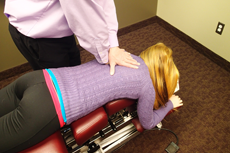
Spinal decompression tables use alternating pull-and-release cycles to apply controlled traction without keeping the spine under continuous force. These cycles allow the spine and surrounding muscles to adjust gradually, which may reduce guarding while creating brief periods of decreased pressure on spinal discs and nerves.
People seeking care near Lone Tree, CO, may encounter spinal decompression as a non-invasive option for certain types of back pain. Understanding how the table works can help patients form realistic expectations before an evaluation.
What Is a Spinal Decompression Table?
A spinal decompression table is a motorized traction device designed to apply a measured pulling force to the spine. The patient generally lies on the table while a harness helps position and stabilize the body.
The system is programmed according to factors such as the treatment area, the patient’s condition, and their tolerance. Instead of pulling continuously at one level, the table alternates between traction and partial relaxation.
This process differs from a chiropractic adjustment. An adjustment involves a controlled movement applied to a joint, while decompression provides gradual traction over a period of time. The two approaches may sometimes be included in the same care plan, but they serve different purposes.
What Happens During the Pulling Phase?
During the pulling phase, the table gently separates segments of the spine. This changes how force is distributed across the spinal joints and discs.
The goal is not to stretch the spine as far as possible. The force is carefully controlled and increased according to the programmed treatment cycle. For some patients, traction may temporarily reduce pressure affecting a sensitive disc or nearby nerve.
The exact sensation varies. Some people notice a mild stretch through the lower back, while others feel very little movement. Decompression should not feel like a sudden or forceful pull.
Why Does the Table Partially Release the Force?
The release phase lowers the pulling force without always removing it completely. This allows the tissues to adjust before the next traction phase begins.
A partial release may serve several purposes:
- It gives the supporting muscles time to relax.
- It reduces prolonged tension on spinal tissues.
- It allows traction to be reapplied gradually.
- It may make treatment more comfortable.
- It helps limit protective muscle tightening.
When the body senses a strong or constant pull, muscles may contract to protect the area. This response is known as muscle guarding. Alternating force levels may make it easier for the body to tolerate traction without responding as strongly.
Why Isn’t Constant Traction Always Used?
Constant traction holds the spine under one level of force for a set period. Although that approach may be appropriate in some situations, it can cause the body to adapt to the pull or increase muscular resistance in certain patients.
Pull-and-release cycles create changing mechanical conditions. Rather than holding tissues in one position, the table repeatedly increases and decreases the load within a controlled range.
This does not mean cyclic traction is appropriate for every form of back pain. The treatment method, force, angle, and duration should be selected according to examination findings and the patient’s health history.
Can Cyclic Decompression Affect Spinal Discs?
Spinal discs sit between the vertebrae and help distribute force during movement. When a disc bulges or becomes irritated, nearby nerves and tissues may also become sensitive.
Traction may create brief changes in pressure within a disc. These changes may encourage movement of water and nutrients through disc tissues while reducing mechanical stress on nearby structures. However, decompression cannot guarantee that a disc will return to a particular shape or that symptoms will disappear.
A chiropractor for lower back pain may consider decompression when the symptoms and examination findings suggest that reducing spinal pressure could be helpful. Parker Integrative Health evaluates each patient before recommending care, and they tailor treatment to the individual rather than using one program for everyone.
What Conditions May Be Considered for Decompression?
Decompression may be discussed for certain people experiencing:
- Disc-related lower-back pain
- Bulging or herniated discs
- Sciatic nerve irritation
- Pain associated with spinal compression
- Persistent lower-back discomfort
- Symptoms that worsen with particular positions or loads
Having one of these conditions does not automatically make someone a candidate. A back chiropractor should consider the severity of symptoms, neurological findings, medical history, and possible contraindications before beginning treatment.
How Is Decompression Different From Other Chiropractic Care?
Chiropractic care can include several approaches depending on the patient’s needs. Decompression applies gradual traction, while a chiropractic adjustment addresses restricted joint movement through a controlled manual or instrument-assisted technique.
A neck adjustment targets findings involving the cervical spine and is not automatically included in care for lower-back pain. Similarly, decompression should be directed toward a relevant treatment area rather than applied routinely.
A sports chiropractor may consider decompression for an athlete with an appropriate disc-related concern. The athlete’s training demands, symptoms, recovery stage, and return-to-sport requirements should also be evaluated.
What Should a Patient Expect During Treatment?
Before treatment, the provider should explain the positioning, expected sensation, and reason for the selected settings. The patient is typically secured comfortably on the table while the computerized system controls the traction cycles.
The pulling sensation should remain tolerable. Patients should report increasing pain, numbness, tingling, dizziness, or other unexpected symptoms immediately. Settings can then be modified or the session stopped.
The number and frequency of visits vary. Progress should be assessed through changes in symptoms, movement, and daily function rather than through a preset schedule alone.
When Might Decompression Be Inappropriate?
Spinal decompression may not be suitable for everyone. Pregnancy, fractures, severe osteoporosis, certain spinal implants, infections, tumors, or significant spinal instability may affect whether traction is appropriate.
New bowel or bladder changes, progressive leg weakness, groin numbness, or severe pain following trauma require prompt medical evaluation. These symptoms should not be managed through routine decompression alone.
What Is the Next Step for Persistent Back Pain?
Pull-and-release cycles allow decompression tables to apply traction gradually while giving muscles and spinal tissues brief periods of reduced force. The method may support comfort and mobility for selected patients, but its suitability depends on the cause of the symptoms.
If lower-back pain continues to affect standing, walking, work, or athletic activity, schedule an evaluation with a qualified healthcare provider serving Lone Tree, CO. A thorough assessment can determine whether spinal decompression or another conservative approach may be appropriate.