


Lower back pain that appears when bending forward but disappears during walking may be related to how the muscles, joints, discs, and surrounding tissues respond to different movements. Bending changes the forces placed on the lumbar spine, while walking involves a more upright posture and alternating muscle activity that some people tolerate more comfortably.
This difference does not automatically indicate a serious spinal condition. However, recurring discomfort during bending can provide important clues about movement limitations, tissue sensitivity, and potential underlying causes.
For residents of Anaheim, CA, understanding these patterns can help determine when simple activity modifications may be appropriate and when a professional evaluation is warranted.
Why Can Bending Hurt When Walking Feels Comfortable?
Bending forward and walking place different mechanical demands on the lower back.
When someone bends to pick up an object, tie their shoes, or reach into a low cabinet, the lumbar spine and hips must coordinate their movements. Depending on the position, bending may increase loading on certain spinal structures and require the surrounding muscles to control the movement.
Walking generally involves smaller, alternating movements of the spine, pelvis, and hips. A person may therefore walk comfortably despite experiencing pain during deeper forward bending.
Several factors help explain this difference:
- Movement direction: Forward bending may aggravate sensitive tissues that tolerate upright movement.
- Muscle activity: Bending requires coordinated muscle control, particularly when reaching or lifting.
- Spinal loading: Different positions distribute forces differently through the discs, joints, and supporting tissues.
- Hip mobility: Restricted hip movement may change how much motion occurs through the lower back.
- Symptom sensitivity: Certain movements may reproduce discomfort even when other activities remain painless.
Importantly, the ability to walk without discomfort does not identify the exact cause of pain. A clinical examination is necessary to interpret the complete symptom pattern.
What Conditions Can Cause Pain During Forward Bending?
Several musculoskeletal conditions can produce bending-related discomfort. Their symptoms may overlap, making self-diagnosis unreliable.
1. Lumbar Muscle Strain
Muscles and connective tissues around the lower back help stabilize the spine during everyday activities.
Repetitive bending, unfamiliar physical activity, or lifting an awkward object may irritate these tissues.
Possible symptoms include localized aching, stiffness, tenderness, and discomfort when moving from a bent position back to standing.
Walking may remain comfortable because it places different demands on the affected tissues.
Minor strains often improve with time and appropriate activity management. Persistent or worsening symptoms deserve further evaluation.
2. Disc-Related Pain
Intervertebral discs sit between the vertebrae and contribute to spinal movement and load distribution.
Some disc-related conditions can produce discomfort during forward bending, particularly when bending is combined with prolonged sitting or lifting.
However, pain during bending does not establish that a disc is damaged or that a herniation is present.
Disc abnormalities can also appear on imaging in people without symptoms.
A clinician considers the patient’s symptom history, physical examination, and neurological findings before determining whether disc involvement is plausible.
3. Movement Coordination Difficulties
Lower back discomfort sometimes develops when the spine, pelvis, and hips do not coordinate efficiently during repeated movements.
For example, someone who bends primarily through the lower back while limiting hip movement may experience discomfort during tasks involving reaching or lifting.
This does not mean there is one universally correct bending technique.
People have different movement capacities, and the relationship between posture and pain is complex.
An evaluation may identify whether changes in movement strategy, strength, flexibility, or activity tolerance could help improve comfort.
4. Other Musculoskeletal Sources
The joints of the lumbar spine, sacroiliac region, and hips may also contribute to discomfort experienced near the lower back.
Because pain can sometimes be referred from nearby structures, the location of discomfort alone may not reveal its source.
A thorough assessment helps distinguish potential causes and determine whether further medical investigation is necessary.
Why Does the Pain Sometimes Appear Only When Standing Up Again?
Some people can bend forward relatively comfortably but experience a sharp sensation when returning to an upright position.
This pattern may occur because the muscles supporting the spine must generate force and coordinate movement as the body rises.
Sensitive muscles, reduced movement tolerance, or certain joint-related problems may become more noticeable during this transition.
For example, a person unloading groceries might feel comfortable reaching into a bag but experience discomfort while straightening up with an item in hand.
The added weight, movement speed, and repeated nature of the task may influence symptoms.
Clinicians may observe both forward bending and the return to standing to understand when discomfort develops.
The timing of pain is useful information, but it is not a diagnosis by itself.
Does Pain During Bending Mean Someone Needs a Back Adjustment?
Not necessarily.
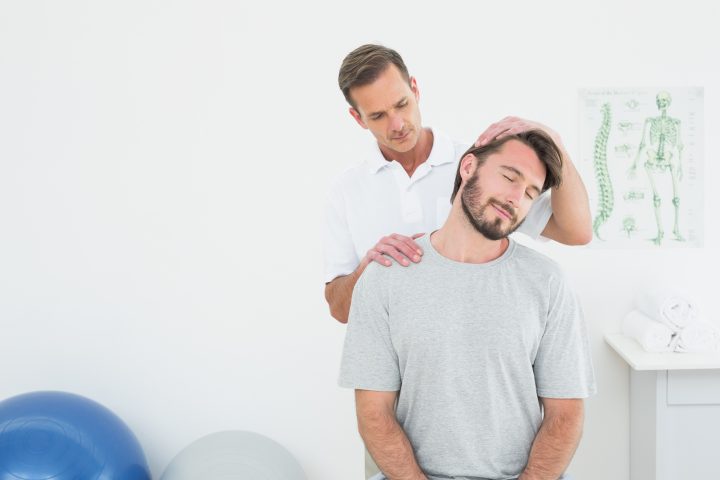
A lower back adjustment is one possible component of chiropractic treatment, but it is not appropriate for every individual or every cause of back pain.
Before considering manual therapy, a clinician should evaluate the nature of the symptoms, relevant medical history, mobility, neurological findings, and potential contraindications.
Spinal manipulation may be considered for certain forms of nonspecific lower back pain as part of a broader conservative management approach.
Its potential benefits and limitations should be discussed with the patient. Treatment does not guarantee pain relief, and some conditions require medical care beyond chiropractic management.
For individuals experiencing recurring bending-related discomfort, the first priority should be understanding the symptoms rather than assuming a particular procedure is necessary.
How Does a Chiropractor Evaluate Bending-Related Lower Back Pain?
A comprehensive assessment examines more than where discomfort occurs.
A clinician may begin by asking when the symptoms started, which activities aggravate them, and whether the pain travels into the buttocks or legs.
Other questions may address previous injuries, work demands, exercise habits, and how symptoms affect daily activities.
The physical examination may include several components.
Movement Assessment
The patient may be asked to bend forward, extend backward, rotate, or perform other movements within comfortable limits.
The clinician observes movement tolerance, range of motion, and whether particular directions reproduce symptoms.
Musculoskeletal Examination
An assessment of the lower back, pelvis, hips, and surrounding musculature may identify tenderness or movement restrictions.
These findings are interpreted alongside the symptom history rather than being treated as definitive proof of a specific diagnosis.
Neurological Screening
When symptoms suggest possible nerve involvement, the examination may include strength, sensation, and reflex testing.
Leg weakness, persistent tingling, or pain extending below the knee may require additional consideration.
Determining Whether Imaging Is Needed
Routine imaging is generally unnecessary for uncomplicated lower back pain without concerning findings.
X-rays and MRI scans serve different purposes and should be requested when the clinical circumstances justify them.
Understanding these assessment steps can help patients make informed decisions about seeking a Back pain chiropractor serving Anaheim and surrounding communities.
How Can Chiropractic Care Fit Into Conservative Back Pain Management?
Chiropractic care may be one option for managing certain types of mechanical lower back pain.
Depending on the examination findings and individual needs, management may involve manual therapy, movement education, and recommendations for maintaining comfortable daily activity.
The goal is to address relevant movement limitations and support functional improvement rather than treat every episode of back pain as the same condition.
A clinician may also discuss how symptoms respond to different activities and whether particular exercises or movement modifications are appropriate.
Evidence-based lower back pain management generally emphasizes remaining active when possible, avoiding unnecessary prolonged bed rest, and gradually returning to normal activities.
Spinal manipulation can be considered for selected patients, although treatment responses vary and it should not replace appropriate evaluation of potentially serious symptoms.
The presence of pain during bending alone does not establish that someone requires ongoing adjustments or a particular number of visits.
What Can Someone Do When Bending Triggers Lower Back Pain?
For mild symptoms without warning signs, several practical measures may help reduce unnecessary irritation while maintaining movement.
Adjust the Way Everyday Tasks Are Performed
During repetitive household activities, consider bringing objects closer to the body and avoiding sudden twisting while carrying heavy items.
When practical, alternate between bending, squatting, and using a hip-hinge movement.
There is no single movement technique that prevents all back pain, so comfort and individual ability should guide these adjustments.
Continue Comfortable Walking
If walking does not worsen symptoms, remaining active may help maintain mobility and general physical conditioning.
Short, manageable walks can be preferable to prolonged inactivity.
However, walking comfortably does not mean painful bending should repeatedly be forced.
Reduce Repeated Heavy Loading Temporarily
Repeated heavy lifting or prolonged forward-bent work may aggravate symptoms during an episode of back pain.
Temporarily modifying these tasks can provide an opportunity to maintain activity without repeatedly provoking substantial discomfort.
As symptoms improve, activities can often be resumed gradually.
Avoid Repeatedly Testing Painful Movements
Some people repeatedly bend forward to determine whether their pain has disappeared.
Occasional movement is normal, but repeatedly pushing into significant pain may increase irritation.
Monitoring overall function and symptom trends is generally more useful than constantly testing the most uncomfortable position.
Seek Guidance When Symptoms Persist
If discomfort repeatedly interferes with work, exercise, sleep, or ordinary activities, a professional assessment may help clarify the next steps.
Exercises and movement recommendations should reflect individual findings rather than assuming every case has the same cause.
When Is Lower Back Pain a Warning Sign?
Most episodes of lower back pain are not caused by a dangerous condition. Nevertheless, some symptoms require prompt medical attention.
Seek emergency medical assessment for new loss of bladder or bowel control, inability to urinate, numbness around the groin or saddle region, or rapidly worsening leg weakness.
These findings may indicate serious neurological involvement.
Medical evaluation is also important when back pain follows significant trauma or occurs alongside fever, unexplained weight loss, a history of cancer, or other concerning changes.
Persistent pain extending into the leg, especially with numbness or weakness, also warrants timely assessment.
Patients should not rely on chiropractic treatment alone when symptoms suggest a condition requiring urgent medical investigation.
What Does the Difference Between Bending and Walking Actually Tell Us?
The contrast between painful bending and comfortable walking suggests that symptoms may depend partly on movement direction, position, or loading.
That information can help guide a clinical examination, but it cannot independently determine whether the cause involves muscles, discs, joints, or another structure.
For Anaheim residents who spend their days lifting supplies, gardening, maintaining their homes, or performing repetitive work, recognizing these patterns can make symptom discussions more productive.
Knowing exactly which movements trigger discomfort, how long symptoms last, and whether neurological changes are present provides more useful information than simply describing the problem as general back pain.
Final Thoughts
Lower back pain during bending but not walking is a common example of how movement-specific symptoms can differ from one activity to another.
The cause may involve muscular sensitivity, spinal structures, movement coordination, or another condition requiring assessment.
Maintaining comfortable activity, modifying aggravating tasks, and seeking appropriate evaluation when symptoms persist are reasonable starting points.
Rather than assuming every painful bend requires a spinal adjustment, individuals should focus on understanding the pattern, identifying warning signs, and choosing care based on their specific circumstances.
About Back to Care Chiropractic
Back to Care Chiropractic is based at 8821 Valley View Street in Buena Park, California, and provides chiropractic care for patients from nearby communities, including Anaheim. Their practice includes Doctor of Chiropractic Bahram Goshtasbi, D.C., whose professional qualifications are listed on the clinic’s website, and offers evaluation and care for back pain and other musculoskeletal concerns. For appointment inquiries, they can be reached at (714) 527-3332, and patients can Find their office on Google Maps.

 SOLED ADEPPS