



Upper back pain often seems like a problem that should disappear after a night of rest, a massage, or a few stretches. Yet for many office workers in San Diego, the discomfort returns as soon as they spend another long day at a desk. The reason is usually not one isolated movement. It is the repeated combination of posture, muscle fatigue, limited movement, and workstation habits.
Understanding why the pain keeps coming back can help people make practical changes and determine when professional evaluation may be appropriate.
Why Desk Work Places Stress on the Upper Back
The upper back, or thoracic spine, supports posture and works closely with the ribs, shoulders, and neck. Although it is naturally more stable than the lower back, it can still become strained when the body remains in one position for hours.
A common desk posture involves the head drifting forward, the shoulders rounding inward, and the upper spine becoming more curved. This places extra demand on the muscles between the shoulder blades and along the back of the neck. These muscles must work continuously to support the head and shoulders.
Over time, they may become tired, tight, or sensitive. The result can be an ache between the shoulder blades, stiffness across the upper back, or discomfort that spreads into the neck and shoulders.
Why the Pain Returns After Temporary Relief
Stretching, heat, or massage may ease tense muscles, but these methods do not always change the habits that caused the tension. If the same workstation setup and sitting pattern continue, the muscles face the same load the next day.
A monitor that is too low, a chair that does not support an upright position, or a keyboard placed too far away can repeatedly pull the body forward. Even a well-designed workstation cannot fully offset the effects of sitting without movement for long periods.
Can Chiropractic Care Help?
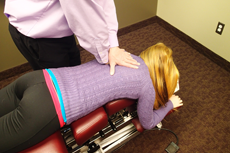
Chiropractic care may be considered when upper back pain is related to restricted joint movement, muscle tension, posture, or repetitive strain. An evaluation may include questions about the location of the pain, daily activities, prior injuries, work setup, and movements that improve or worsen symptoms.
A chiropractor may also assess spinal mobility, shoulder movement, muscle balance, and posture. Care can include manual techniques, mobility exercises, soft-tissue work, and guidance for reducing repeated strain.
Herfindahl Chiropractic provides information about chiropractic for upper back pain, including how they evaluate possible contributors before recommending an individualized approach.
An upper back pain chiropractor should also look for signs that the discomfort may need medical evaluation. Chiropractic treatment is not appropriate for every source of upper back pain, especially when symptoms are related to illness, fracture, or another condition outside the musculoskeletal system.
What Workstation Changes May Reduce Strain?
Small adjustments can make desk work less demanding on the upper back. The monitor should be positioned so the screen can be viewed without repeatedly looking downward. The keyboard and mouse should be close enough that the elbows stay near the body rather than reaching forward.
Feet should rest comfortably on the floor or a foot support. The chair should allow the person to sit back without forcing the shoulders to round. However, there is no single perfect posture that should be held all day.
Movement is often more important than maintaining a rigid position. Standing briefly, walking, changing sitting positions, and moving the shoulders every 30 to 60 minutes can reduce prolonged loading.
Which Exercises May Be Useful?
Gentle movement may help restore mobility and improve muscular endurance. Common examples include shoulder blade squeezes, chest stretches, thoracic rotation, and controlled upper-back extension.
Exercises should feel comfortable and should not be forced. Sharp pain, numbness, weakness, or symptoms traveling into an arm are reasons to stop and seek an evaluation.
Strengthening may also be important. Stretching tight areas without improving the endurance of the upper-back and shoulder muscles may provide only short-lived relief.
When Should Upper Back Pain Be Evaluated?
Professional evaluation may be appropriate when pain lasts for several weeks, repeatedly interrupts work or sleep, follows an accident, or occurs with arm symptoms.
Urgent medical attention may be needed for upper back pain with chest pressure, difficulty breathing, fever, unexplained weight loss, severe weakness, loss of coordination, or sudden symptoms after a significant injury.
Building a Healthier Desk Routine in San Diego
Long hours at a desk can make recurring upper back pain feel unavoidable, but repeated discomfort often reflects factors that can be changed. Workstation setup, movement frequency, and muscle endurance can all influence how the upper back responds to a workday.
For desk workers in San Diego, the goal is not to hold one “perfect” posture. It is to reduce prolonged strain, move regularly, and seek an appropriate assessment when pain continues to return. A plan based on the likely source of the symptoms is more useful than repeatedly addressing discomfort only after it appears.

 SOLED ADEPPS